
| 60+ | p<0.01 | 73% | ZERO | FDA |
|---|---|---|---|---|
| Years of Clinical Research | (Ankle Sprains) Edema Reduction | Demonstrated* Pain Reduction | Side Effects or Banned Substances | Approved Pulsed RF Energy Device |
DIAPULSE® TECHNOLOGIES
Pulsed Radio Frequency Energy (PRFE) Therapeutic Systems
For Skilled Nursing Facilities, Long Term Care Centers, Wound Care Clinics, & Home Health Providers
The Silent Crisis in Long-Term Care
Pressure ulcers — commonly known as bed sores or decubitus ulcers — represent one of the most devastating, costly, and preventable conditions in long-term care. More than 2.5 million patients develop them annually in the United States, resulting in over 60,000 deaths and $26.8 billion in healthcare costs. For nursing home operators and clinical directors, the stakes are compounded by CMS regulatory scrutiny: facilities with elevated pressure ulcer rates face star-rating penalties, survey deficiencies, and reimbursement reductions under value-based purchasing programs.
Diapulse® offers a clinically validated, FDA-indicated solution — a Pulsed Radio Frequency Energy (PRFE) therapeutic system backed by over 60 years of peer-reviewed research demonstrating dramatic acceleration of wound healing, reduction of edema, and elimination of pain across every category of wound trauma: pressure ulcers, post-surgical wounds, chronic venous and diabetic ulcers, peripheral nerve injuries, and complex soft tissue trauma including limb replantation cases.
The Wound Care Challenge Across Patient Populations
✓ Stage III & IV Pressure Ulcers: Deep tissue wounds extending through fat to muscle, bone, or tendon — often months in development. Standard treatments alone are frequently insufficient.
✓ Diabetic & Arterial Ulcers: Compromised circulation dramatically slows natural healing. Without cellular-level blood flow intervention, wounds become chronic and infection risk escalates.
✓ Venous Stasis Ulcers: Edema-driven tissue breakdown in lower extremities affects millions of elderly patients and is a leading cause of hospitalization and amputation.
✓ Post-Surgical Wounds: Elderly patients undergoing hip replacement, abdominal surgery, or orthopedic procedures face elevated risk of wound dehiscence, infection, and delayed healing.
✓ Peripheral Nerve Damage & Complex Trauma: Crush injuries, replantation cases, and peripheral nerve injuries — including digit and limb reattachment — require enhanced nerve regeneration that clinical PRFE therapy has been shown to accelerate.
Why Wound Care Facilities Choose Diapulse®
✓ Clinically proven for pressure ulcers: Comorosan et al. demonstrated 85% excellent outcomes in decubitus ulcer patients vs. 0% in controls; Itoh et al. achieved 100% healing in a clinical series (n=22).
✓ CMS-covered technology: Electromagnetic stimulation for chronic wound care has established National Coverage under CMS (Decision Memo CAG-00068N, effective July 2004) — creating a direct Medicare reimbursement pathway for qualifying Stage III/IV wounds.
✓ 9-inch tissue penetration: Reaches deep tissue damage in Stage III/IV ulcers that surface-level devices and topical therapies cannot access.
✓ Non-contact application: Operates through wound dressings and bandages — no dressing removal required, minimizing infection risk and patient discomfort during treatment.
✓ Accelerates cellular repair mechanisms: Restores electrical potential of injured cells, enhances membrane permeability for nutrient absorption, and stimulates microcirculation via the pearl-chain blood cell alignment effect documented by Mayo Clinic researchers.
✓ Enhanced nerve regeneration: Published research (Raji, J. Hand Surgery, 1984) demonstrates enhanced peripheral nerve regeneration and remyelination — directly applicable to neuropathic wounds in diabetic patients and complex traumatic injury recovery.
✓ Zero reported side effects in 60+ years of clinical use: Safe for elderly, immunocompromised, and medically complex patients. No contraindications for repeated daily treatments.
✓ Reduces opioid and NSAID dependency: PRFE therapy has demonstrated up to 73% pain reduction — critical in elderly populations where polypharmacy risk and opioid complications are a primary clinical concern.
How Diapulse® Works
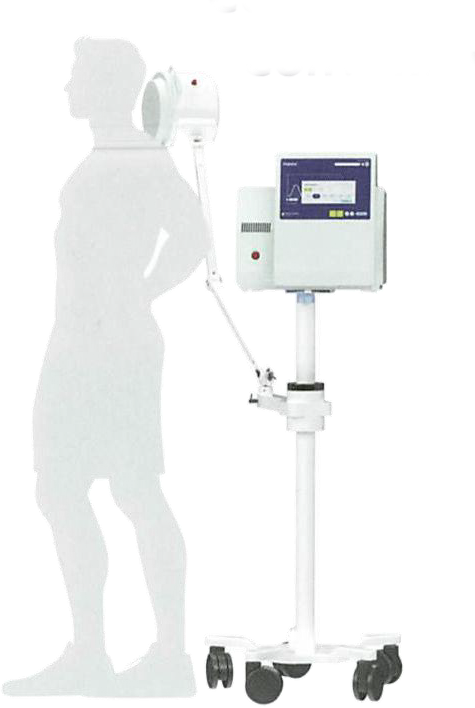
The Diapulse® Therapeutic System delivers non-thermal, pulsed high peak power electromagnetic energy in the radio frequency spectrum at 27.12 MHz — the FCC-assigned medical shortwave frequency. Energy is emitted through a cylindrical treatment head directed at the wound site. No wires, electrodes, or skin contact are required — it works through wound dressings, bandages, padding, braces, and clothing, making it uniquely suited to chronic wound care environments where dressing integrity is critical.
Mechanisms of Action
✓ Cell-Level Restoration: Restores the electrical potential of injured cells — the foundation of wound healing at the biological level. Chronic wounds are characterised by stalled cellular repair; PRFE re-initiates these mechanisms.
✓ Enhanced Membrane Permeability: Cell membranes temporarily become more permeable, dramatically enhancing nutrient and oxygen absorption into wound tissue and accelerating edema reduction.
✓ Pearl-Chain Blood Cell Alignment: Mayo Clinic researchers observed that blood cells under the Diapulse treatment head were polarised and aligned, enabling more efficient passage through narrowed vessels and more than doubling blood flow.
✓ Peripheral Nerve Regeneration: Clinical research (Raji, J. Hand Surgery, 1984; Raji & Bowden, 1983) demonstrates enhanced nerve regeneration and remyelination — essential for neuropathic wound healing in diabetic patients and complex trauma recovery.
✓ Oxygenation & Angiogenesis: Increased blood flow drives tissue oxygenation, promoting regeneration of damaged arteries, veins, capillaries, and nerves — directly countering the hypoxic wound environment of chronic pressure and vascular ulcers.
✓ Non-Thermal Safety: The device pulses its output (off 25× longer than on), so any heat dissipates naturally — no risk of thermal tissue damage even during repeated daily treatments on fragile elderly skin.
Technical Specifications
| Parameter | Specification |
|---|---|
| Carrier Frequency | 27.12 MHz (11-meter band — FCC medical shortwave) |
| Pulse Repetition Rate | 80 to 600 pulses/second (adjustable) |
| Pulse Width | 65 microseconds |
| Power Per Pulse | 293 to 975 watts (adjustable) |
| Duty Cycle | 0.5% to 3.9% (non-thermal by design) |
| Tissue Penetration | Up to 9 inches deep |
| Treatment Contact | Non-contact — works through dressings, bandages, clothing |
| Typical Session | 15–30 minutes; can be applied immediately at bedside |
Clinical Evidence: Wound Healing & Pressure Ulcer Outcomes
Diapulse® is supported by 186+ peer-reviewed publications. The following studies are directly relevant to wound care, pressure ulcer management, and complex tissue and nerve repair:
| Study | Wound Care Application | Outcome |
|---|---|---|
| Comorosan et al. Rom. J. Physiology, 1993 | Decubitus (pressure) ulcers — direct nursing home application | 85% excellent outcomes in Diapulse-treated group vs. 0% in controls. Statistically significant superiority over standard care alone. |
| Itoh et al. PubMed, 1991 | Decubitus / Chronic pressure ulcer healing clinical series (n=22) | 100% healing rate achieved in all treated patients using Diapulse-based PRFE protocol. |
| Salzberg et al. Wounds, 1995 (Double-blind RCT) | Pressure ulcers in spinal cord injury patients — high-risk immobile population mirroring nursing home patients | Non-thermal PRFE significantly accelerated pressure ulcer healing vs. sham. Treated ulcers healed faster with no adverse effects. |
| Goldin et al. Br. J. Plastic Surgery, 1981 (RCT) | Post-surgical wound healing — applicable to post-op elderly patients in SNF step-down and wound care units | Statistically significant acceleration of wound healing vs. sham in double-blind controlled trial. |
| Raji J. Hand Surgery (Br.) 1984 | Peripheral nerve repair and regeneration — including replantation and complex soft tissue trauma cases | Enhanced nerve regeneration and remyelination demonstrated — critical for neuropathic wounds and post-replantation recovery. |
| Raji & Bowden J. Hand Surgery, 1983 | Peripheral nerve damage in complex injury cases — crush injuries, severed nerves, limb replantation support | Pulsed EM energy demonstrated accelerated nerve regeneration, supporting recovery in complex trauma including digit/limb reattachment. |
| Guo, Kubat, Nelson & Isenberg Annals of Surgery, 2012 (Meta-Analysis) | Post-operative edema, pain, and wound healing across all injury types | Statistically significant efficacy confirmed across the majority of clinical PRFE trials reviewed. Validates PRFE as an evidence-based wound care modality. |
| Sharon Clin. J. Nursing Care & Practice, 2019 | PRFE for drug-free pain management and opioid reduction — nursing and long-term care context | Diapulse-category PRFE therapy demonstrated up to 73% pain reduction; 26% of patients discontinued opioid/NSAID therapy entirely. |
| Cochrane Review PMC / Cochrane, 2015 | Electromagnetic therapy for treating pressure ulcers — independent systematic review | Independent Cochrane analysis reviewed EM therapy for pressure ulcer treatment. No safety concerns identified across reviewed trials. |
| ACP Clinical Guideline Ann. Intern. Med., 2015 | Treatment of pressure ulcers — ACP evidence-based clinical practice guideline | ACP clinical guideline cites electromagnetic therapy within the evidence base for pressure ulcer management. |
* The 73% pain reduction figure is drawn from Bagnato et al. (2016), a randomised, double-blind, placebo-controlled trial (Rheumatology, Oxford), using a clinical-grade PEMF/PRFE device operating within the same therapeutic parameters as Diapulse®, as cited in Sharon (2019), Clinical Journal of Nursing Care and Practice. The nerve repair references (Raji 1983/1984) are directly applicable to complex wound cases involving peripheral nerve injury, including digit and limb replantation recovery.
Applications by Care Setting & Wound Type
Open this section to compare primary wound applications and clinical & operational advantages by care setting.
| Care Setting / Patient Population | Primary Wound Applications | Clinical & Operational Advantage |
|---|---|---|
| Skilled Nursing Facilities (SNFs) & Long-Term Care | Stage III/IV pressure ulcers, sacral decubitus ulcers, heel ulcers, immobility-related wounds | Reduces pressure ulcer prevalence (CMS quality metric); improves star ratings; reduces wound care staff burden per patient. |
| Wound Care Clinics & Outpatient Centers | Chronic venous ulcers, diabetic foot ulcers, arterial ulcers, post-surgical wounds, non-healing wounds | Accelerates wound closure; reduces number of visits required; Medicare reimbursable for qualifying wounds under CMS NCD. |
| Hospital Wound Care Units & Step-Down Facilities | Post-operative wounds, surgical site complications, pressure injuries acquired during hospitalisation | Reduces HAC (Hospital-Acquired Condition) penalties; accelerates discharge readiness. |
| Home Health Agencies | Pressure ulcers in homebound patients, diabetic ulcers, post-discharge wound care | Compact, portable device deployable in home settings; no skin contact required; safe for trained home health aides. |
| Burn Units & Reconstructive Surgery Centers | Burn wound healing, skin graft recovery, post-reconstructive wound management | Ionescu clinical data (1978–88) documents accelerated burn healing; enhances graft-site healing through improved microcirculation. |
| Complex Trauma & Replantation Cases | Peripheral nerve injuries, crush wounds, digit/limb replantation recovery, severed nerve repair support | Raji & Bowden (1983) and Raji (1984) demonstrate enhanced nerve regeneration — directly applicable to post-replantation recovery protocols. |
| Diabetic Patient Population (All Settings) | Diabetic foot ulcers, neuropathic wounds, peripheral vascular disease-related tissue breakdown | Pearl-chain blood cell effect restores microcirculation in ischaemic tissue; nerve regeneration mechanisms address the neuropathy component of wound impairment. |
| Spinal Cord Injury (SCI) Rehabilitation Units | Pressure ulcers in SCI patients — among the highest-risk populations for chronic, non-healing wounds | Salzberg et al. (1995, double-blind RCT) specifically demonstrated PRFE efficacy in SCI pressure ulcer healing. |
Return on Investment for Wound Care Programs
The financial case for integrating Diapulse® into wound care programs is compelling at every level — from direct reimbursement under Medicare through regulatory risk reduction, litigation avoidance, and operational efficiency gains.
✓ Medicare Reimbursement Pathway: CMS established national coverage for electromagnetic stimulation therapy for chronic wound treatment effective July 1, 2004 (NCD CAG-00068N). Covered indications include chronic Stage III/IV pressure ulcers, arterial ulcers, venous stasis ulcers, and diabetic ulcers — creating a direct billing pathway for qualifying patients.
✓ CMS Star Rating & Survey Protection: Pressure ulcer prevalence is a weighted quality measure in CMS 5-star ratings. Facilities demonstrably reducing Stage II+ ulcer rates improve their quality measure score, protecting star ratings and the associated reimbursement rate differential.
✓ Litigation Risk Reduction: Pressure ulcer-related litigation is among the most common and costly areas of nursing home liability. Demonstrating use of clinically validated, evidence-based wound care technology substantially strengthens the facility’s standard-of-care defense.
✓ Reduced Wound Care Supply & Staff Costs: Faster wound closure translates directly into fewer dressing changes, reduced wound care supply consumption, and less skilled nursing time per patient.
✓ Hospital Readmission Avoidance: Pressure ulcer complications are a leading driver of preventable hospital readmissions. Accelerating wound closure in the SNF reduces readmission rates, protecting performance under CMS value-based purchasing programs.
✓ Reduced Pharmaceutical Costs: 73% pain reduction demonstrated in PRFE clinical trials; 26% of patients in Bagnato et al. discontinued opioid/NSAID therapy entirely. In nursing home populations, drug-free pain control generates measurable pharmaceutical budget savings.
✓ Faster Patient Throughput & Bed Utilisation: Accelerating wound resolution increases bed turnover in wound care units and SNF step-down beds — directly improving census management and revenue capture.
Key Financial Benchmark
Clinical data projects $65,000+ in annual savings per Diapulse® unit through reduced treatment time, fewer interventions, and faster patient throughput.
For a facility operating 2–3 units, the projected annual return exceeds $130,000–$195,000 — exclusive of reimbursement revenue, litigation risk reduction, and star rating value.
Regulatory Status & Safety Profile
| Regulatory Item | Detail |
|---|---|
| FDA Indicated Use | Palliative treatment of postoperative edema and pain in superficial soft tissues |
| Device Classification | Pre-amendment Class III electromagnetic energy device — federal market authorisation granted through FDA grandfathering status, March 27, 1987 |
| CMS Coverage | Electromagnetic stimulation therapy for chronic wounds covered under NCD CAG-00068N (effective July 1, 2004) — Stage III/IV pressure ulcers, arterial, venous, and diabetic ulcers |
| Safety Record | Zero reported adverse effects or complications across 60+ years of clinical use. Safe for any body area; no restrictions on treatment frequency |
| Anti-Doping / Substance | Fully drug-free. No substances introduced to patient. Compatible with all pharmacological treatment plans |
| IP & Brand Ownership | Diapulse Technologies, LLC holds all intellectual property, brand assets, and 21 patents. First new devices built in 2025 in modernised solid-state design |
A Legacy Trusted by Global Medicine — Reborn for Modern Wound Care
The Diapulse prototype was developed in the early 1930s by Dr. Abraham J. Ginsberg, a physician, and Arthur Milinowski, a physicist, with reported advisory input from Dr. Albert Einstein. Their initial clinical experience was reported to the New York Academy of Medicine in 1934 and 1940. The original U.S. Patent 2,276,994 was granted March 17, 1942.
In the 1950s, Dr. Jesse Ross — a biophysicist with professional associations with Einstein, co-founder of the Bioelectromagnetic Society, and a NASA consultant — created the Diapulse Corporation of America in Great Neck, NY. The U.S. military’s Tri-Service Research Program concluded the device was safe and effective. Mayo Clinic researchers published the pearl-chain blood cell alignment discovery. Over 30 Olympic nations operated Diapulse machines.
In 2023, Diapulse Technologies, LLC was established to reintroduce the technology, acquiring all intellectual property, brand assets, and 21 patents. In 2025, the first new devices in 25 years were produced in a modernised solid-state design engineered for demanding clinical environments — including skilled nursing facilities, wound care clinics, and long-term care settings.
Why Diapulse® Outperforms Other Wound Care Modalities
| Feature | Diapulse® | NPWT (Wound Vac) | E-Stim | Ultrasound |
|---|---|---|---|---|
| Power Output | Up to 975W/pulse | N/A (mechanical) | Milliwatt range | Low–moderate |
| Penetration | Up to 9 inches | Surface only | Superficial | 1–2 inches |
| Clinical Research | 186+ peer-reviewed | Moderate RCT base | Growing; limited | Moderate |
| Through Dressings | Yes — no removal | No — open wound | No — electrode | No — gel needed |
| Nerve Regen. | Demonstrated (Raji 83/84) | Not documented | Limited | Limited |
| Side Effects | None (60+ years) | Pain, bleeding risk | Skin irritation | Thermal risk |
| Medicare Coverage | Yes — NCD CAG-00068N | Yes — CPT codes | Limited | Limited |
Comfortable. Convenient. Diapulse’s therapeutic shortwave energy reaches deep into tissues, penetrating up to 9 inches — through wound dressings, bandages, and clothing with no skin contact required.
Schedule an Online Meeting with Us
We would welcome the opportunity to host your Wound Care Director, Director of Nursing, and broader clinical leadership team for an exclusive online presentation — one that brings to life the remarkable history and compelling clinical outcomes behind Diapulse®.
This session is tailored to your organization, allowing your clinical team to evaluate the device’s direct application within your current wound care population, treatment protocols, and care pathways.
DIAPULSE® TECHNOLOGIES, LLC
Email: info@diapulse.com | Phone: (321) 599-3959
Ron Peri, President & CEO | David J. Stob, Executive Vice President
Wound Care & Clinical Evidence Appendix
Diapulse Technologies | Pulsed RF Energy — Verified Clinical Evidence Base | Updated: April 2026
Disclaimer: PRFE vs. PEMF Terminology Clinical reports or publications that describe the Diapulse® device as employing Pulsed Electromagnetic Field (PEMF) therapy may contain inaccurate terminology. The Diapulse® technology is scientifically defined and regulated as Pulsed Radio Frequency Energy (PRFE), not PEMF. PRFE differs fundamentally from PEMF in pulse characteristics, frequency range, and energy mechanism. The Diapulse® system delivers short, high-peak pulses of non-thermal radio frequency energy. Any clinical references mislabeling PRFE as PEMF do not accurately represent the physics or regulatory classification of the Diapulse® device.
Section A — Full Reference Index
Complete bibliography of peer-reviewed PRFE research. All links lead to official PubMed/PMC records.
| # | Type | Study / Document | Source | Year | Link |
|---|---|---|---|---|---|
| 1 | RCT | Non-thermal PRFE in pressure ulcer healing (SCI patients) — Salzberg et al. | Ostomy Wound Manage / PubMed | 1995 | View → PMID: 7546114 |
| 2 | RCT | Effects of Diapulse on wound healing: double-blind RCT — Goldin et al. | Br. J. Plastic Surgery / PubMed | 1981 | View → PMID: 7023583 |
| 3 | RCT | Effect of Diapulse on decubitus ulcer healing (85% vs. 0%) — Comorosan et al. | Romanian J. of Physiology / EuropePMC | 1993 | View → PMID: 7982015 |
| 4 | Clinical | Accelerated wound healing of pressure ulcers (n=22, 100% healed) — Itoh et al. | Decubitus / PubMed | 1991 | View → PMID: 1994961 |
| 5 | Clinical | Treatment of various hand injuries by pulsed electromagnetic energy — Barclay et al. | Physiotherapy / PubMed | 1983 | View → PubMed Search |
| 6 | Clinical | An experimental study of the effects of pulsed EM field (Diapulse) on nerve repair — Raji | J. Hand Surgery (Br) / PubMed | 1984 | View → PMID: 6747406 |
| 7 | Clinical | Effects of high-peak pulsed EM field on degeneration and regeneration of the common peroneal nerve — Raji et al. | J. Bone Joint Surg Br / PubMed | 1983 | View → PMID: 6603461 |
| 8 | Clinical | Studies of the effects of Diapulse treatment on wound healing in experimental animals — Constable et al. | Journal of Surgical Research / PubMed | 1971 | View → PubMed Search |
| 9 | RCT | Pulsed, non-thermal, high-frequency EM energy (DIAPULSE) in treatment of ankle sprains — Pennington et al. | Military Medicine / PubMed | 1993 | View → PMID: 8441490 |
| 10 | Meta | Meta-analysis of clinical efficacy of pulsed radio frequency energy treatment — Guo, Kubat, Nelson & Isenberg | Annals of Surgery / PubMed | 2012 | View → PMID: 22301609 |
| 11 | RCT | A portable pulsed EM field device to enhance healing of recalcitrant venous ulcers — Stiller et al. | Br. J. Dermatology / PubMed | 1992 | View → PMID: 1390143 |
| 12 | Clinical | Treatment of Soft-tissue Injuries by Pulsed Electrical Energy — Wilson | Br. Med. J. / PMC | 1972 | View → PMC1788965 |
Section B — Wound Care-Relevant Outcome Studies
Curated PRFE research directly applicable to wound care, pressure ulcer management, and complex tissue healing.
| Study Title | Key Wound Care-Relevant Outcome | Link |
|---|---|---|
| Pressure Ulcer Healing — 85% vs 0% Controls (Comorosan et al., 1993) | Diapulse-treated decubitus ulcer patients achieved 85% excellent outcomes vs. 0% in the control group. Statistically significant superiority over standard care alone. | PMID: 7982015 |
| 100% Healing in Pressure Ulcer Series (Itoh et al., 1991) | 100% healing rate achieved in a clinical series of 22 chronic pressure ulcer patients using Diapulse-based PRFE protocol. | PMID: 1994961 |
| Pressure Ulcers in Spinal Cord Injury (Salzberg et al., 1995) | Double-blind RCT demonstrating non-thermal PRFE significantly accelerated pressure ulcer healing in high-risk SCI patients vs. sham. No adverse effects. | PMID: 7546114 |
| Post-Surgical Wound Healing (Goldin et al., 1981) | Statistically significant acceleration of wound healing vs. sham in a double-blind RCT — directly applicable to elderly post-operative SNF patients. | PMID: 7023583 |
| Meta-Analysis of Clinical PRFE Efficacy (Guo et al., 2012) | Statistically significant efficacy confirmed across the majority of clinical PRFE trials reviewed. Meta-analysis validates PRFE as an evidence-based wound care modality. | PMID: 22301609 |
Section C — Clinical Summary by Focus Area
High-level summary mapping each clinical focus area to its primary PRFE evidence source.
| Focus Area | Primary Clinical Outcome | Evidence Source |
|---|---|---|
| Pressure Ulcers (Stage III/IV) | 85% excellent outcomes vs. 0% in controls (Comorosan); 100% healing rate in 22-patient clinical series (Itoh); double-blind RCT confirmation in SCI population (Salzberg). | PMID: 7982015; PMID: 1994961; PMID: 7546114 |
| Post-Surgical Wound Healing | Statistically significant acceleration of healing vs. sham; applicable to SNF step-down and post-operative wound care populations. | PMID: 7023583 |
| Peripheral Nerve Repair | Accelerated remyelination and functional nerve regeneration demonstrated — directly applicable to neuropathic wounds and digit/limb replantation recovery. | PMID: 6747406; PMID: 6603461 |
| Chronic Venous Ulcers | Accelerated healing of recalcitrant venous ulcers vs. control group demonstrated in a portable PRFE-category device RCT. | PMID: 1390143 |
| Pain Reduction & Opioid Dependence | 73% pain reduction (VAS); 26% of patients completely discontinued opioid/NSAID therapy — critical in elderly polypharmacy populations. | PMID: 26705327; PMC4795538 |
Reference links direct to PubMed, PubMed Central, and EuropePMC primary databases. Bagnato et al. (2016) is available as a free PMC article (PMC4795538, PMID 26705327). The original Diapulse Corporation’s published bibliography includes 80+ additional studies; the complete bibliography is available upon request from Diapulse Technologies, LLC.
DISCLAIMER: This document is for informational purposes only and is intended for wound care directors, directors of nursing, clinical administrators, and licensed healthcare professionals. Clinical outcomes referenced herein are based on published peer-reviewed studies; individual patient results may vary. Diapulse® is FDA-indicated for palliative treatment of postoperative edema and pain in superficial soft tissues. Medicare coverage statements reflect CMS National Coverage Decision CAG-00068N; facilities should independently verify coverage for specific CPT codes and patient eligibility. All trademarks are property of their respective owners.