UROLOGY
Urinary Tract Disorders

Diseases of the urinary tract represent one of the most common forms of infection by microorganisms.
Normal urine is free of microbial contamination. The most common infectious agent is Escherichia Coli, followed by Enterbacter Klebsiella and Proteus. The latter may be of particular significance, since colonization by that organism may lead to deposition of urinary calculi (stones). Streptococcus and Pseudomonas Aeruginosa may cause serious problems
because of their high level of drug resistance.
Urinary tract infections usually begin with the entry of the organism into the distal end of the urethra. Bladder infections result from ascending movement of the microbial agents along the urethra. The use of catheters, particularly among the elderly is a frequent cause of urinary infections.
Kidney disorders, ranging from structural abnormalities to bacterial infections may lead to renal failure. Glomerulonephritis refers to a diverse group of conditions involving the glomerulus. Its features include urinary casts, proteinuria, hematuria, hypertension, edema, and finally uremia.
In the context of urology, Diapulse therapy has been used as adjunctive therapeutic agent in the treatment of recurrent pylonephritis and prostatitis in males, (as well as chronic cystitis in females). It increases prostate drainage, stimulates the blood flow and the efficiency of chemotherapeutic agents.
Taalat1 undertook a clinical study on 20 patients harboring Trichomonas, 8 with recurrent prostatitis and 12 with recurrent pyelitis, divided into 2 groups of 10 patients each:
- group A – the patients were treated chemotherapeutically with Metronidazole for 10 days;
- group B – the patients were treated with Metronizadole for 10 days and adjunctively with Diapulse in light contact with the prostate area.
In addition to the treatment applied to these patients, their sexual partners were adequately treated for Trichomonasis, in order to demonstrate or not – as previously proved – that 80 % of these sexual partners harbored the parasite.
The cases were re-examined on weekly intervals for 4 weeks and once a month, subsequently for one year.
The results showed:
- group A – 6 failures were found at the end of the 4 weeks treatment;
- group B – no relapses except for one – a patient who admitted having several sexual partners and therefore re-infection couldn’t be ruled out.
The cure rate in recurrent pyelitis and recurrent prostatitis in the male was greatly improved by supplementing the classic form of treatment with Diapulse therapy.
This therapy apparently increases the prostate drainage (confirmed by the presence of prostatic debris, sperm and Trichomonads in the post-treatment urine), stimulates the blood flow or by an unknown mechanism improves the inflammatory response to chemotherapy.
A randomized double-blind study performed by Bentall and Eckstein2 in 1975, referred to orchidopexy surgery on boys of various ages displaying undescended testicles.
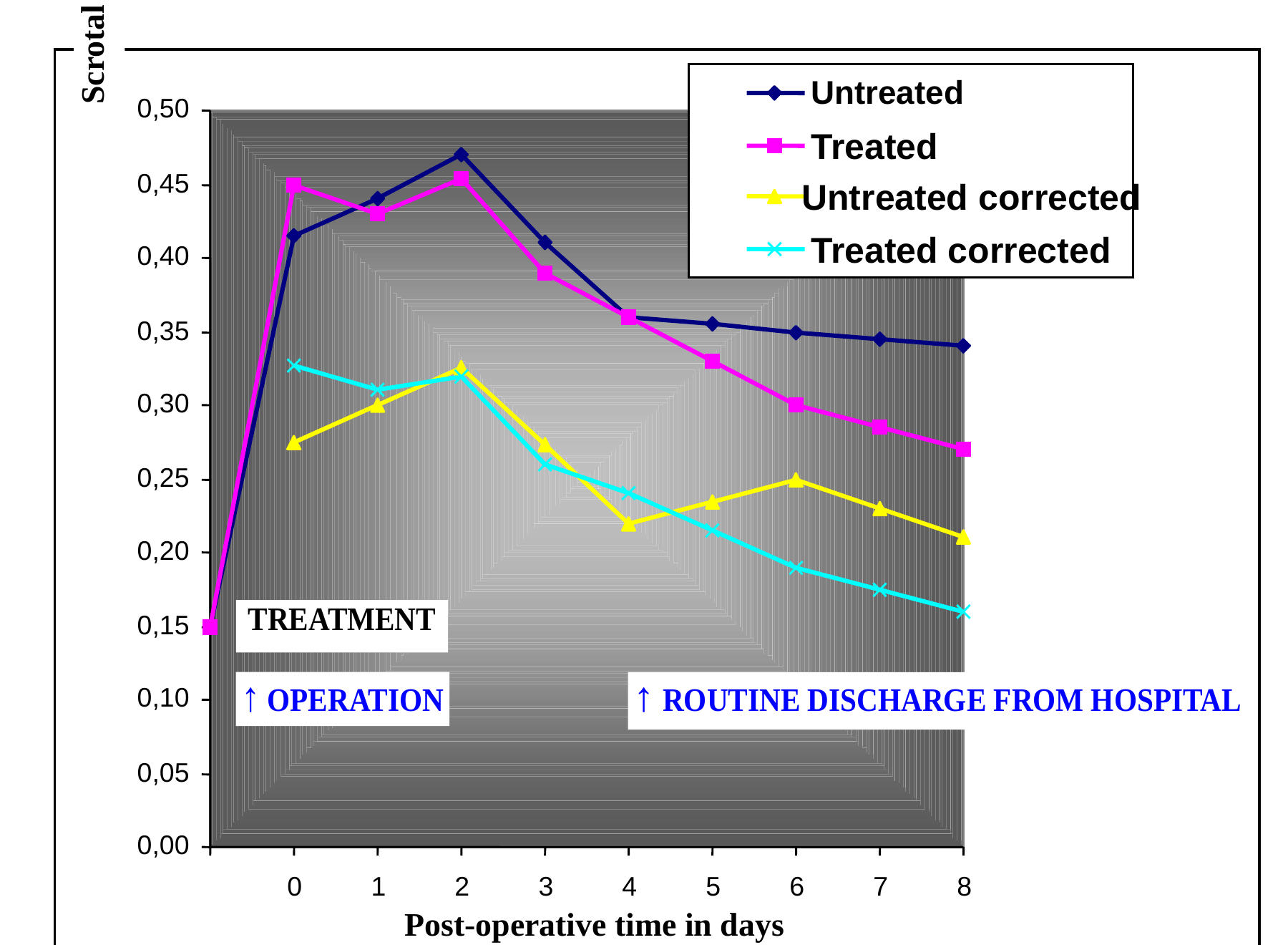
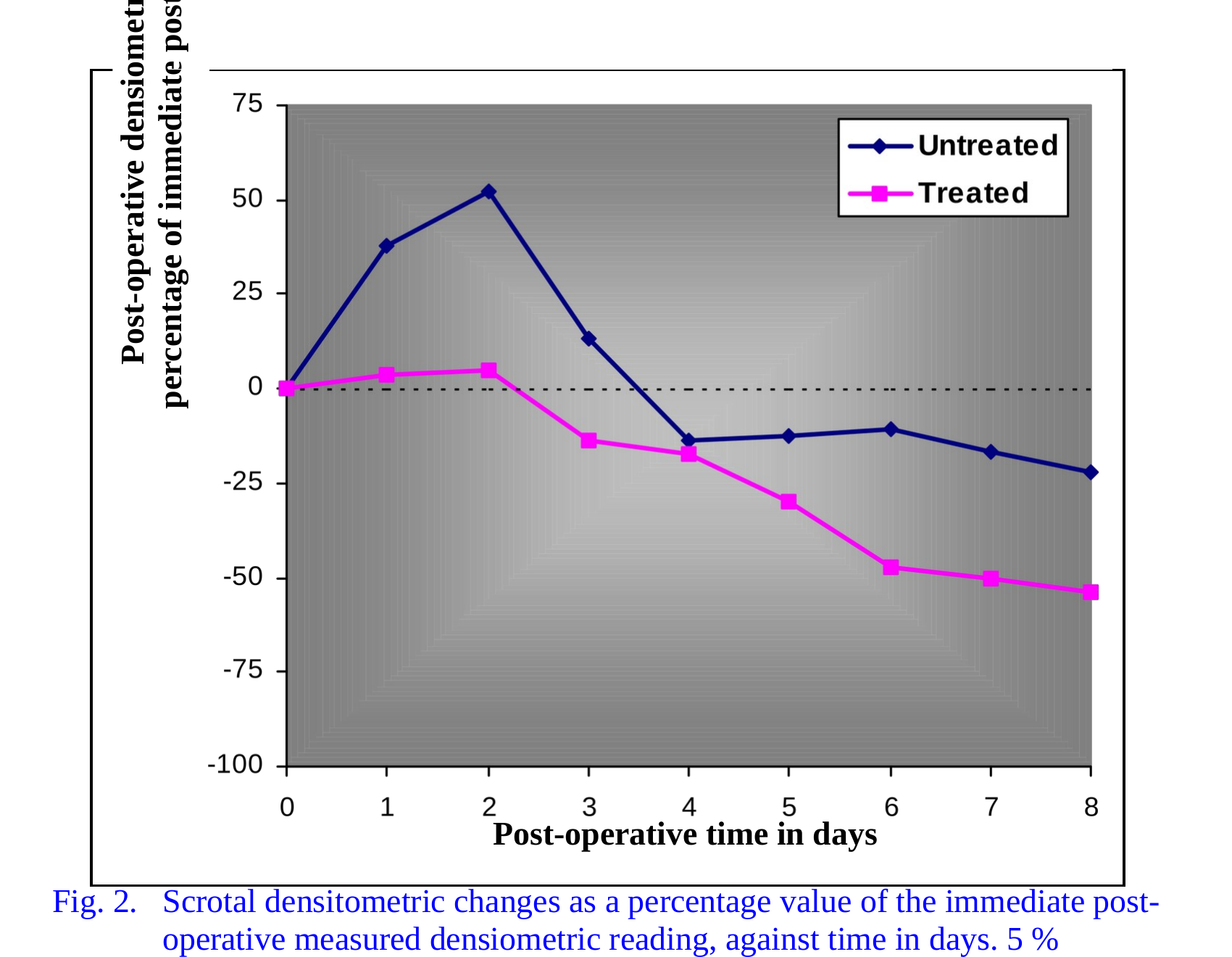
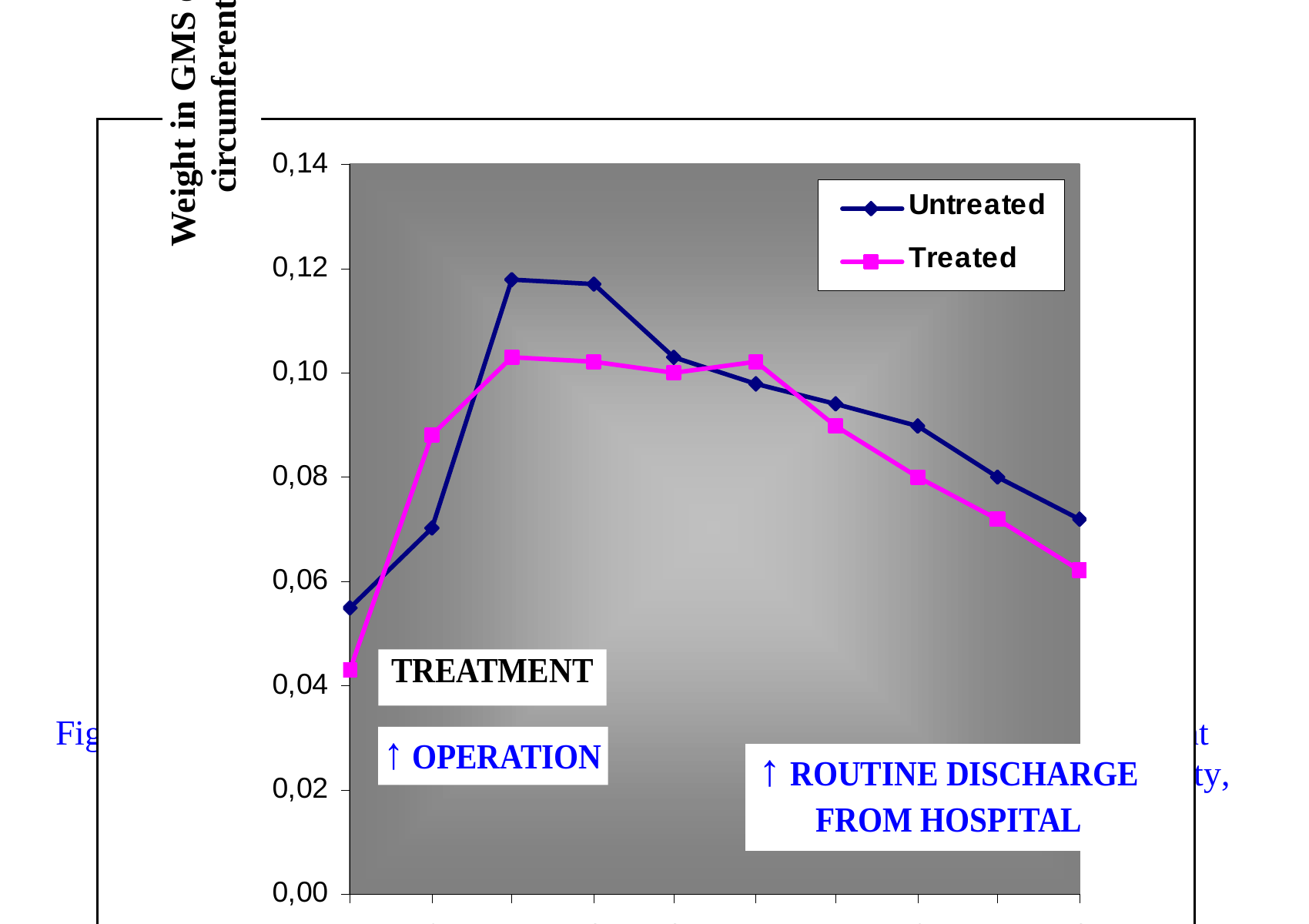
The study was composed of 62 boys who underwent the same pre-surgical and post-surgical environmental changes. Using a Polaroid camera and a circumferential measurement of scrotal area, it was possible to follow both parameters of bruise and edema formation and the subsequent resolution in absolute numerical values.
Diapulse therapy was applied twice a day for the first 4 post-surgical days. The settings were 500 pulses per second at a penetration of 5 for 20 minutes locally, and 500 pulses per second at a penetration of 4 for 10 minutes on the epigastrum.
The results confirmed the beneficial biological effects of a non-thermal pulsed electromagnetic field. The rate of bruise resolution was found significantly increased by this therapy and a trend of increased rate of reduction of scrotal circumferential measurement seen (Figures 1 – 3). There were no side effects, and the young patients found treatment to be reassuring and soothing.
Pulsed high frequency high peak power electromagnetic energy as produced by Diapulse accelerates the post-operative period of bruise resolution and wound healing and reduces post-operative edema.
References
- Taalat SM: Trichomonas as a cause of recurrent pyelitis and recurrent prostatitis in male. (London) Communication, 1975.
- Bentall RHC, Eckstein HB: A trial involving the use of pulsed electromagnetic therapy on children undergoing orchidopexy. Zeitschrift Für Kinderchirurgie. 17(4):380-389, 1975.
Figures