
Clinical research chapter · Burn injuries · pp. 113-119
Burn Injuries
Source chapter: “Burn Injuries,” pp. 113-119. Original PDF linked below.
A special section of plastic and reconstructive surgery is represented by burn injuries: injury to skin and other tissue caused by contact with dry heat (fire), moist heat (steam or hot liquids), chemicals, electricity, lightening, radiation. The depth of the injury is proportional to the intensity of the heat of the causative agent and the duration of exposure. Burns are measured by layer of skin affected. According to this parameter, burns are classified in three groups:
- First degree burns involved the epidermis and are characterized by redness, pain and edema (such as in sunburn).
- Second degree burns involve the epidermis and dermis and are characterized by intense pain, redness and blistering.
- Third degree burns destroy the entire skin and expose the underlying organs. Skin is charred and numb and does not protect against fluid loss.
From a medical viewpoint, burns are classified as:
- Major or severe, involving more than 20% of body surface and any deep burn of the hands, face, feet or perineum.
- Moderate, involving 5-20% of body surface without any deep burns of hands, face, feet or perineum.
- Minor, involving less than 5% of body surface, generally treated without hospitalization.
The immediate outcome of a burn is determined more by its extent (amount of body area affected) than by its depth (layers of skin affected). The depth of one burn is of importance when the question arises as to how much surgical treatment, including skin grafting, will be required.
General treatment of a burn injury includes pain relief, control of infection, maintenance of the balance of fluids and electrolytes in the system and a good diet, high-protein and vitamins to aid in the repair process. In cases of minor burns or scalds, cooling is one of the most effective ways of relieving pain. In cases of moderate burns or scalds, the text describes antiseptics, dressings and pain-relieving agents.
Clinical observations
Severe burns are treated in specialized clinics. The process of healing is slow and tedious, including careful nursing, physiotherapy and occupational therapy. In some cases, depending on the extent of the burn, skin grafts may be considered.
The source describes early Diapulse work in burn units and in tube pedicles and flaps procedures. It reports that in 1974 Ionescu introduced Diapulse therapy for burn patients and later studied its use on burned hands.
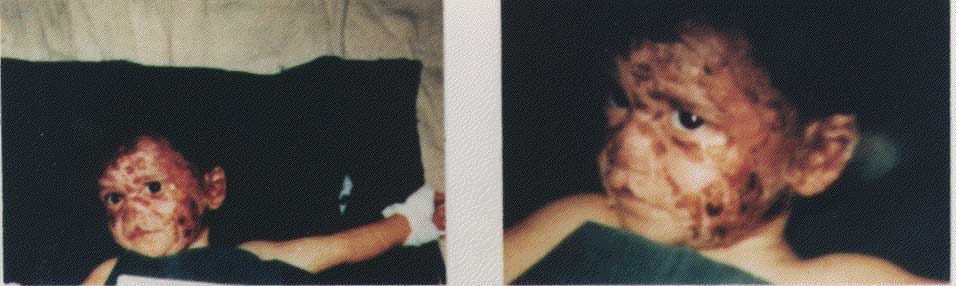
The source states that Diapulse therapy was applied to 43 patients, as soon as possible after admission, for 10 to 15 minutes on the areas most affected by burns for 3-5 days, at 600 pps and 6 peak power t.i.d. The clinical observations recorded were:
- Pain relieved after the first session.
- Edema remarkably diminished.
- In the local evolution, aggravation of the wound was no longer noticed.
- The debridement of burns was more rapid and the granular surface became suitable for grafting under improved conditions.
Figure 1. Effect of Diapulse therapy on a 3rd degree burn hand.
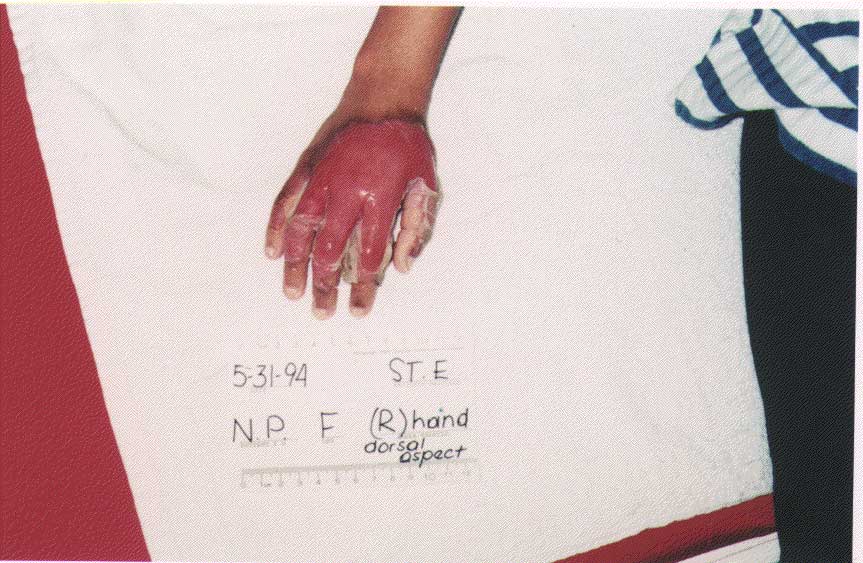
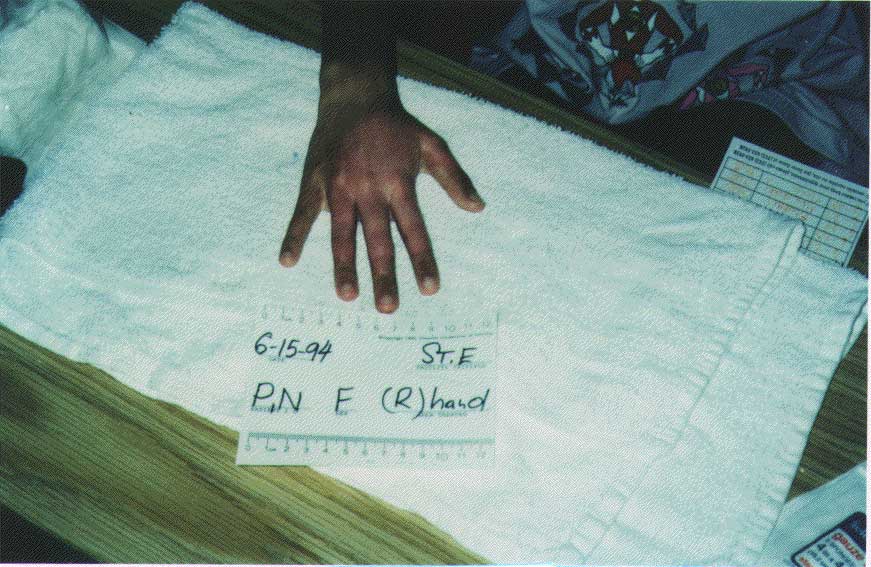
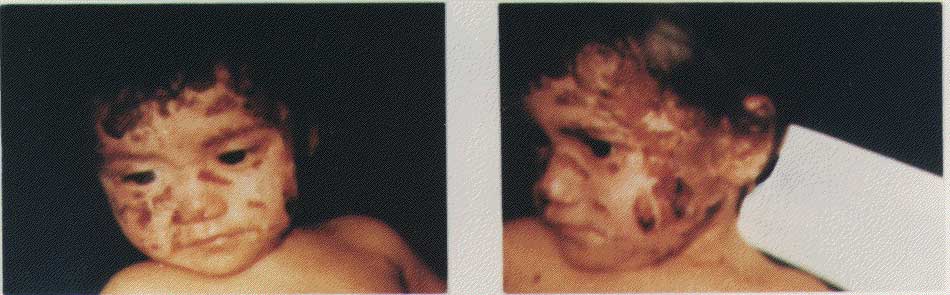
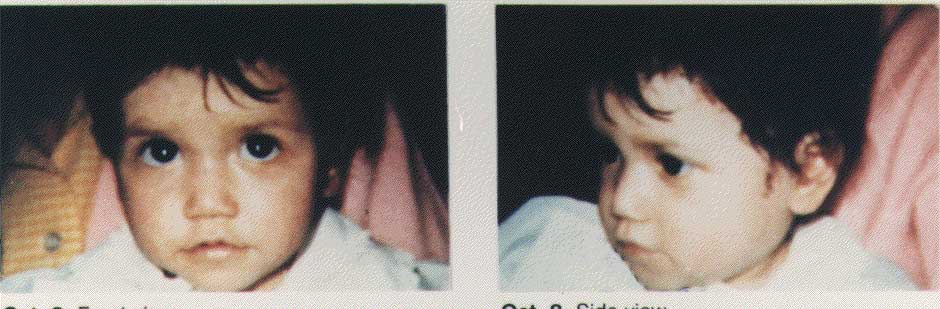
Figure 2. Effect of Diapulse therapy on a 1st and 2nd degree face burn.
Enzyme study
Because the clinical results were significantly positive, Ionescu and staff tried to find objective proofs for them. Considering local enzymic activity as an indicator of viability, they checked total proteins and significant enzymes in normal and burned tissue before and after Diapulse therapy.
The study was performed on 20 burned patients admitted to the hospital as emergencies. Enzymic changes in epidermal cells were studied in three samples of skin taken from each patient:
- One sample was taken from the burned area before treatment.
- The second sample was taken from a nearby unburned area, considered the control.
- The third sample was taken from the burned area 24 hours after the burn and after Diapulse therapy.
Patients were treated once daily for 3-5 days. Diapulse was applied through bandages and surgical dressing, over each burned area for 10 minutes at a setting of 600 pulses per second and 6 peak power.
| Measure | Normal tissue | Injured tissue | Diapulse treated |
|---|---|---|---|
| Proteins | 3.31 ± .58 | 2.8 ± .6 | 3.42 ± 1.0 |
| LDH | 1657 ± 241 | 1356 ± 108 | 1788 ± 310 |
| GOT | 80.7 ± 19.9 | 73.75 ± 18.6 | 90.87 ± 26.7 |
| GPT | 16.2 ± 2.6 | 16.8 ± 3.0 | 19 ± 5.7 |
| Alkaline phosphatase | 16.8 ± 4.8 | 15.3 ± 5.1 | 17.8 ± 5.8 |
The laboratory data showed, in the case of Diapulse-treated samples, an increase of total protein concentration and an increase of LDH and alkaline phosphatase activity. The GPT activity is slightly increased while GOT’s activity decreased. The text describes this as a preliminary biological framework for discussing wound healing at a subcellular level.
Radionecrosis
The source also describes a study concerning Diapulse therapy on radionecrosis, involving 40 selected patients. It discusses local circulation, edema and hematoma, transmembrane ion transport, and cell permeability. The chapter reports observed effects and notes that its account reflects 17 years of hospital use on trauma and burn injuries.
References
- Bornstein LA: Acceleration of transfer of tube pedicles and flaps. Presented: XI Latin American Congress of Plastic Surgery, Bogota, Columbia, Oct. 1969.
- Ionescu A: The utilization of pulsed electromagnetic energy, Diapulse, for the acceleration of the healing processes in first, second and third degree burns. Abstracts: 4th International Congress on Burns, Buenos Aires, Argentina, Sep. 15-21, 1974.
- Ionescu A: The utilization of pulsed electromagnetic energy, Diapulse, for the acceleration of the healing processes in first, second and third degree burns. Abstracts: 4th International Congress on Burns, Buenos Aires, Argentina, Sep. 15-21, 1975.
- Ionescu A, Milicescu S: Five years of Diapulse therapy in the department of burned patients. Abstracts: 5th International of Burned Injuries, 5:86, 1978.
- Ionescu A: Study of efficiency of Diapulse therapy on the dynamics of enzymes in burned wound. The Bulletin and Clinical Review of Burn Injuries, I (II): 25-26, Apr. 1984.
- Ionescu A, Talnar E, et al: The effect of Diapulse therapy on burned wounds: a clinical and experimental study. Abstracts, The Medical Congress of the Balkan Countries, 5:96, 1988.
- Ionescu A: Pulsed high peak power electromagnetic energy (Diapulse) in the treatment of radionecrosis. Abstracts: The 8th International Congress on Burn Injuries, New Delhi, India, Nov. 1990.